


Meet the team - Land Management
Meet the team behind Bowyer’s Wood – exploring rewilding, woodland conservation and the people working with the Green Britain Foundation to make space for nature.
Read More
The Green Britain Foundation is rewilding land across Britain; restoring native habitats, reintroducing lost species, and creating space for wildlife to return and thrive.
Discover how we’re working with nature to rebuild biodiversity and strengthen ecosystems for future generations.
The Green Britain Foundation is restoring landscapes across our landholdings, transforming over-grazed, nutrient-depleted ground into thriving habitats rich in life.
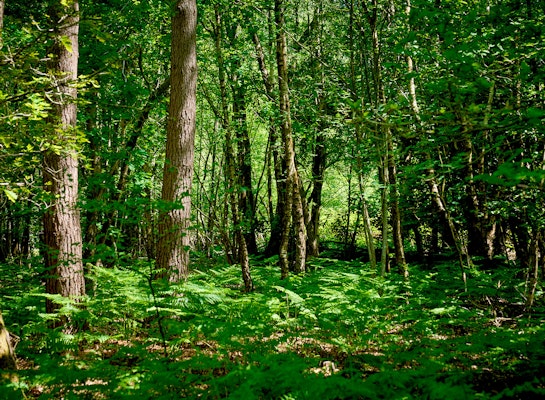
Our sites include open grassland with vast wildflower potential, former wetlands being returned to their natural state through beaver reintroduction, and ancient semi-natural woodland carefully managed to encourage regeneration.
By working with the Forestry Commission, local conservation groups, and volunteers, we’re creating sanctuaries for protected and priority species — from owls, storks and honey buzzards to water voles, hazel dormice, newts and butterflies.
Across our rewilding sites, we’re allowing native woodland to reclaim the land through natural regeneration, supported by targeted seeding and tree planting.
We’re re-establishing a sustainable coppice regime focused on sweet chestnut, reviving areas that have been overgrown for decades and helping light reach the forest floor, where wildflowers, ferns and spring blooms can flourish once more.
In open glades — previously over-grazed by livestock — we’re creating wood pastures and experimenting with wood meadow techniques: selective thinning, native wildflower reseeding and tapered woodland edges that blend seamlessly into fields.
Fallen trunks are left to rot naturally, forming multi-layered scrub belts that provide nesting sites for warblers, cover for hedgehogs and warm basking spots for butterflies and insects.
Former wetlands on our sites are being reshaped into dynamic habitats. We’re excavating shallow scrapes that flood in winter and spring, creating feeding grounds for waders such as lapwing and curlew and habitat for amphibians and aquatic insects.
As summer arrives, small ponds will retain water longer, supporting dragonflies, marsh frogs and water voles. This deliberate sculpting of land and water accelerates what natural succession would take decades to achieve.
Our first major reintroduction will take place in East Sussex, where we’ve secured a Natural England licence to introduce a pair of beavers into a purpose-built enclosure. Their natural engineering will help improve local hydrology, slow water flow, and create habitats for countless other species — from otters to aquatic invertebrates.
“Beavers are nature’s engineers. They’ll transform the landscape, creating wetlands that bring life flooding back.”
Britain has the lowest forest cover in Western Europe, at just 13%. Restoring native woodland is vital — for wildlife, carbon storage and climate resilience.
Our replanting strategy combines natural regeneration with targeted tree planting. We’re gradually reducing non-native pine plantations once grown for commercial timber and replacing them with native species like oak, birch and rowan.
Reintroducing native forest cover is a long-term commitment, undertaken in consultation with the Forestry Commission through a detailed woodland management plan. The result will be diverse, self-sustaining woodlands that store carbon, support biodiversity and strengthen ecosystems for generations to come.
Understanding and monitoring our impact is key to our success.
We’re beginning with baseline biodiversity surveys, assessing plants, soils, trees, birds, bats, insects and mammals. Using a combination of local ecological expertise and advanced technology — including acoustic monitors, trail cameras and thermal drone surveys — we can map change over time.
These surveys will be repeated on a one- to five-year cycle to track progress and measure how quickly biodiversity is improving.
To read more about our land restoration work, see regular field updates and stories from our rewilding team, visit the Community Stories section on the Ecotalk website. Ecotalk is one of our partners, helping enhance all we’re doing.
Together, we’re creating landscapes that breathe again — places where people, wildlife and ecosystems can thrive side by side.
400Acres of land under management
Over 1000Species recorded
Donate to the GBF's Land Stewardship Programme
Meet the team behind Bowyer’s Wood – exploring rewilding, woodland conservation and the people working with the Green Britain Foundation to make space for nature.
Read More