A jellyfish species that has wreaked havoc on Norway’s salmon industry has now arrived in Scotland, killing 200,000 salmon and causing widespread environmental and welfare impacts.
The String of Pearls Jellyfish (Apolemia uvaria) also known as the string jellyfish or barbed wire jellyfish, has struck two Scottish salmon farms, Invertote and Muck, resulting in a substantial emergency harvest. It marks what is believed to be the single worst incident involving this species on a salmon farm in Scotland.
Shocking footage reveals scale of mortality
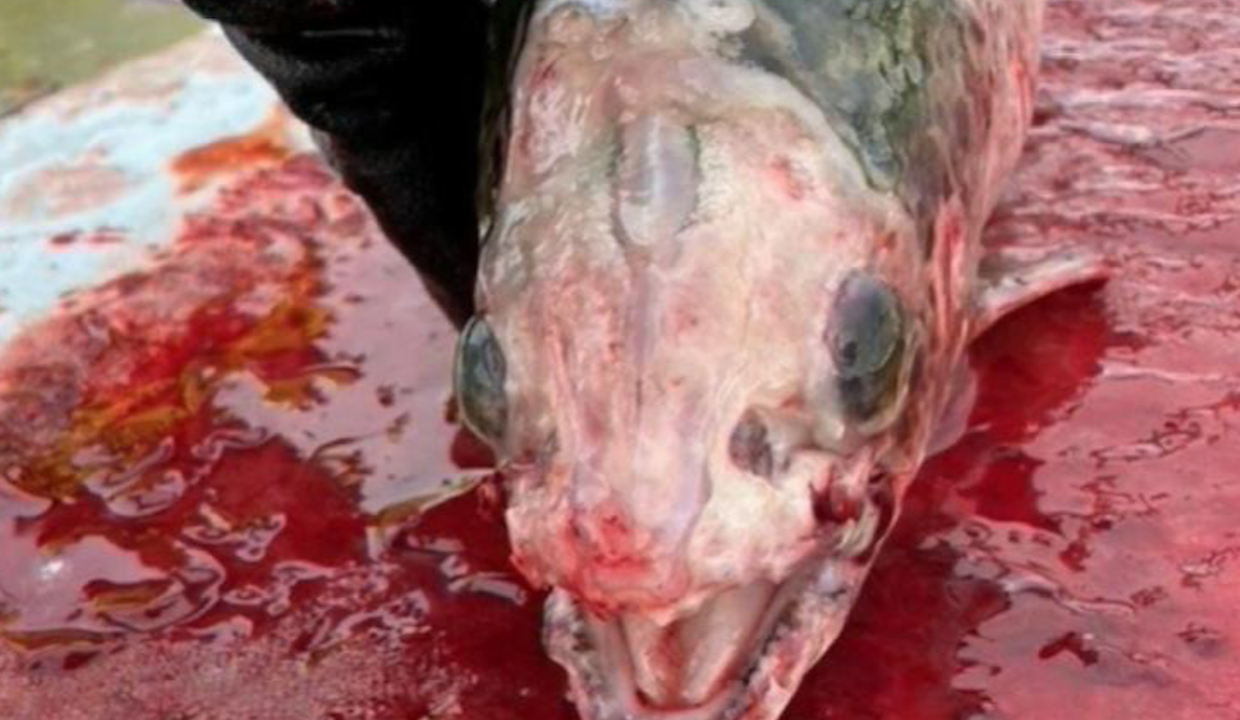
Footage released today by the Green Britain Foundation, captured at Invertote just two days before the jellyfish attack was officially detected, shows tonnes of salmon of varying sizes being removed from the site.
Watch the video here – credit: Green Britain Foundation
The string jellyfish deliver a devastating assault on salmon. Their venomous tentacles burn the fish’s skin, eyes and gills; trapped in densely packed pens, the salmon are unable to escape the stings. These wounds leave the fish severely stressed and highly vulnerable to infection and disease — often leading to a slow and agonising death.
Environmental and welfare concerns
The arrival of these jellyfish in Scottish waters is deeply alarming. Similar outbreaks have devastated Norwegian salmon farms in recent years, prompting warnings from regulators about escalating jellyfish risks linked to climate change and warming seas.
Dale Vince, founder of the Green Britain Foundation, said:
“This jellyfish attack is the latest example of how the fish farming industry is failing to cope with environmental challenges. We routinely see them using the land and sea as a sewer for their toxic business, and now nature is fighting back. It’s time for real accountability and for these companies to face the consequences of their actions.”
This latest incident exposes the vulnerability of open-net salmon farming, where fish are reared in exposed sea pens that cannot protect against natural or pollution-driven threats. As climate change continues to disrupt marine ecosystems, the industry faces increasing exposure to unpredictable and catastrophic events.
Confirmed mass mortalities
Official Fish Health Inspectorate (FHI) data confirms the scale of the losses:
Between 28 October and 3 November 2024, Organic Sea Harvest, operator of the Invertote site, reported the mortality of 32,000 fish, each averaging 2.297 kg, and subsequently carried out an emergency harvest of the remaining stock. View FHI Mortality Event MRT05359
The Muck Fish Farm, owned by MOWI, reported the death of 163,232 salmon between 18 October and 13 November 2024. View FHI Muck Farm data
Combined, these figures represent nearly 200,000 dead salmon — a significant blow for both the environment and animal welfare.
Warnings from Norway
Norwegian regulators have been battling the same jellyfish species for several years. In late October 2024, the Norwegian Food Safety Authority issued an industry-wide warning, advising salmon farmers to prepare for jellyfish attacks and implement measures to mitigate their impact on fish stocks (Bloomberg, 31 October 2024).
The scale of the problem in Norway has been extraordinary:
The previous winter, more than three million salmon were killed by jellyfish attacks (SalmonBusiness, 2024).
In 2023, the country recorded its highest-ever mortality rate of sea-phase salmon, with over 100 million salmon and trout deaths registered (We Are Aquaculture, 2024).
By early November 2024, Norwegian authorities were urging fish farmers to consider culling affected stocks, as the jellyfish were causing severe burns to the skin and gills of salmon and widespread secondary infections (Animal Feed MEA, 2024).
A warning for Scotland
The Scottish outbreak mirrors events already seen in Norway, where climate-driven jellyfish blooms are becoming more frequent and deadly. For the Green Britain Foundation, this serves as a stark warning about the fragility and ecological cost of industrial salmon farming.
The Foundation is calling for:
An immediate review of environmental safeguards around salmon farms.
Transparent public reporting of fish mortalities and causes.
A national plan to phase out open-net salmon farming, replacing it with closed-containment systems that protect both fish welfare and marine ecosystems.
Credits and further information
Video footage: Download and view here – free to use with credit to Green Britain Foundation.