HopeSprings Chairs at Funnel Wood: craftsmanship in harmony with nature
At the Green Britain Foundation, we believe in connecting people with the land, not only through restoration and rewilding, but also through the crafts and traditions that bring us closer to nature. That’s why we were delighted to partner with Jason Mosseri of HopeSprings Chairs in early 2023.
Jason is a traditional craftsman and educator who works from our Funnel Wood site in East Sussex, teaching the art of Windsor chairmaking and green woodworking. His courses give people the chance to slow down, reconnect with natural materials and experience the therapeutic rhythm of working by hand.
Meet the maker: Jason Mosseri, HopeSprings Chairs
Jason creates modern Windsor chairs and furniture rooted in traditional forms, with sculptural balance and bold, distinctive silhouettes.
“I make modern Windsor chairs and furniture, with a strong emphasis on finely balanced, sculptural form and strong bold silhouette grounded in the traditional aesthetic of historic chairmaking.”
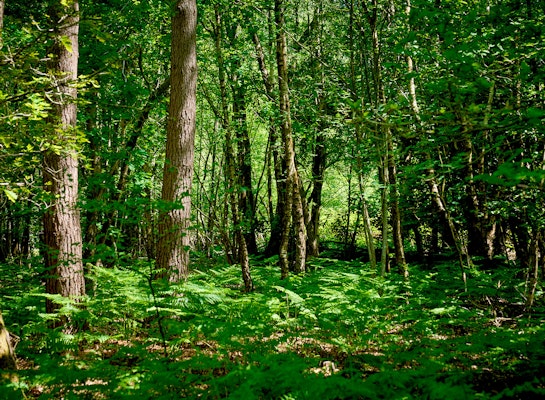
For more than a decade, Jason has been teaching adults the craft of Windsor chairmaking. His six-day log to chair course runs through the spring and summer months, entirely off-grid - no Wi-Fi, no distractions - in a canvas-covered woodland workshop set among the trees of Funnel Wood, a 250-acre woodland stewarded by the Green Britain Foundation.
“I teach a six day ‘log to chair’ course… using hand tools only, away from Wi-Fi and phone signal, in a charming canvas covered workshop nestled in the leafy depths of Funnel Wood, a 250-acre Sussex woodland stewarded by The Green Britain Foundation.”
A woodland with history
Funnel Wood is a diverse landscape of broadleaf trees and conifers, with areas of historically coppiced hazel, chestnut and hornbeam. These species have long been valued in rural crafts for their strength, flexibility and beauty, used for furniture, fencing, basketry, charcoal and lime.
Since relocating his workshop to the woodland, Jason has begun using timber from the site; particularly chestnut and ash harvested as part of our biodiversity restoration work. The reopening of neglected coppices not only supplies valuable timber for craft but also supports wildlife, creating habitats for insects, birds and small mammals.
“I’ve started to use some of the Chestnut and Ash that is being removed to encourage regrowth and biodiversity… bringing neglected coppices back into traditional rotation… will massively encourage and nurture a broad range of insect and bird life, whilst at the same time, producing valuable timber for use in traditional crafts and processes.”
Craft rooted in sustainability
Jason’s approach is intentionally low-impact. The wood he uses is typically sourced within twenty miles of his workshop, often as a byproduct of sustainable woodland management.
“I’m proud of the fact that my craft, and my method of working, has a low impact on the environment, and has close ties to carefully managed woodland.”
His process includes steam bending timbers into graceful curves, carving elm and walnut seats, and shaping ash spindles with traditional drawknives and shave horses. At the heart of his practice is the pole lathe — a simple foot-powered turning lathe driven by a flexible hazel pole.
“My main tool for producing the ‘turned’ elements of chairs… is the pole lathe. This is an archaic bit of kit — wonderfully lo-fi — powered by a foot operated treadle that relies on a ‘springy’ Ash or Hazel pole… Once mastered, its hypnotic motion is utterly compelling.”
Making as connection
For Jason, chairmaking is more than a craft; it’s a way of reconnecting people with the natural world and their own creativity.
“It is a hugely rewarding experience to see the profound satisfaction that my students experience when finishing a chair that they have made from scratch with their own hands.”
“I strongly believe that making and creating in this somatic way is hugely therapeutic for modern people… it is a fundamental aspect of ourselves and our ancestry, waiting to be discovered and explored.”
We are proud to support Jason’s work in Funnel Wood, where traditional craftsmanship meets sustainable woodland management. His work reflects the Foundation’s wider purpose: demonstrating that people and nature can thrive together through creativity, respect and care for the land.