Rewilding often brings to mind the idea of leaving land to "return to nature". However, for places like Downicary, centuries of intensive grazing and drainage have altered the land so deeply that simply walking away would not allow nature to recover. Without intervention, the site would become dominated by coarse grasses with limited conservation value.
Instead, the Green Britain Foundation is taking an active restoration approach, helping the land regain its natural balance through careful rewetting, replanting and monitoring.
Restoring wetlands and wildlife habitat
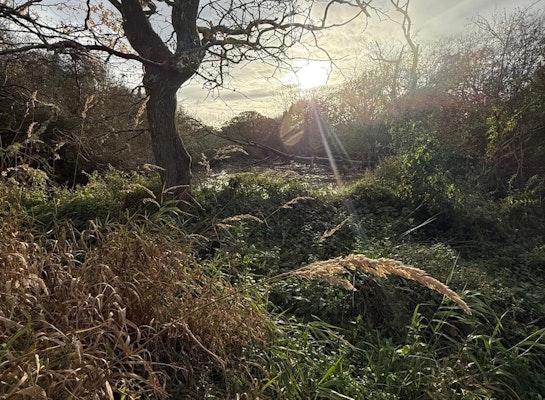
So far, site management has focused on rewetting the land by breaking drainage lines and creating ponds and shallow scrapes. These water features provide a more textured landscape that supports a wider range of birds, insects, reptiles and mammals.
Around the new wetland margins, wildflowers and shrubs are regenerating naturally. Plans include spreading green hay containing local flower seeds, planting wetland species and introducing native fruiting trees to further boost biodiversity.
Transforming an industrial, improved grassland into a thriving wetland ecosystem requires a blend of science, skill and patience and, as the team notes, "a little luck". Species such as grass snakes or white egrets may choose to colonise the site, but through careful planning and management, we can give nature the best possible chance.
Why monitoring matters
Surveying and monitoring are central to understanding how the landscape is responding to restoration. These activities help to:
Establish a baseline for biodiversity and habitat condition.
Assess the impact of management interventions.
Guide future funding and conservation priorities.
Measure progress over time, ensuring transparency and accountability.
By bringing all survey data together, we can form a clear picture of where we started, where we’re heading, and how successful we’ve been in restoring the site’s natural value.
What we’re measuring
Plants
National Vegetation Classification (NVC): categorises plant communities by soil type and species composition. This national scheme helps identify rare or significant habitats for targeted management.
Species lists: record all plant species present on site, allowing us to track biodiversity change over time.
Fixed sampling plots: provide consistent long-term data on vegetation change under the current management regime.
Invertebrates
Species lists: track diversity and abundance of insects as habitat quality improves.
UK Butterfly Monitoring Scheme (UKBMS) transects: monitor butterfly populations at Downicary and compare them with national trends.
British Dragonfly Society (BDS) transects: record dragonfly populations and contribute to the national UK Dragonfly Database.
Freshwater invertebrate surveys: focus on beetles, flies and aquatic bugs, which are vital indicators of water quality and wetland health.
Vertebrates
Species lists: document all vertebrate species recorded on site.
Reptile tin transects: provide artificial refuges to monitor grass snakes, lizards, frogs, toads and newts.
Breeding Bird Surveys (BBS): record existing breeding populations and track new bird species as habitats improve.
Small mammal trapping: conducted under strict welfare standards to identify and monitor the site’s small mammal communities.
Building a living picture of recovery
Over time, these detailed surveys will reveal how biodiversity responds to the restoration of Downicary. By combining data across plants, invertebrates and vertebrates, we can measure ecological progress and understand which interventions are most effective.
This scientific monitoring ensures that our stewardship is guided by evidence and responsive to change, helping us restore Downicary not just as a landscape, but as a living, interconnected ecosystem.