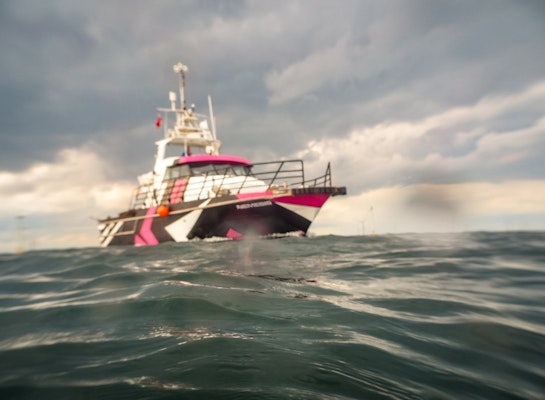
Filming by the Green Britain Foundation (GBF) has uncovered shocking conditions at Loch Leven, a salmon farm certified as organic by the Soil Association, despite severe breaches of welfare and environmental standards.
During a week of filming, GBF documented lice levels more than ten times higher than the industry’s own threshold of 0.5 lice per fish at the very moment when endangered wild salmon smolts were migrating to sea.
At the same time, the farm conducted a chemical delousing treatment using Salmosan (azamethiphos), an organophosphate pesticide banned under Soil Association standards because of its extreme toxicity.
Mortality records show that more than 3% of the caged salmon died as a direct result of this treatment in a single week.
The chemical threat: Salmosan (azamethiphos)
Salmosan’s active ingredient, azamethiphos, is known to have devastating ecological and health effects:
Highly toxic to shellfish and crustaceans, killing species like crabs, lobsters, and shrimp.
Very toxic to birds that come into contact with treated water.
Persistent in marine environments, disrupting the delicate ecosystems of lochs and coastal waters.
Toxic to humans: the Soil Association itself warns that organophosphates like azamethiphos are linked to reduced male fertility, foetal abnormalities, chronic fatigue syndrome, and Parkinson’s disease.
Despite these dangers, Loch Leven remains certified organic by the Soil Association.
Toxic chemicals and double standards
The Soil Association has given the salmon farming sector 12 months’ notice to eliminate the use of banned chemicals or lose certification; yet farms like Loch Leven continue to trade under the “organic” label during this grace period.
Dale Vince, founder of the Green Britain Foundation, said:
“This is unbelievable. The Soil Association recognises the harm Salmosan causes and of course stands against the use of all chemicals in animal farming - but allows it in the farming of fish. Why?
Any land-based farm using chemicals like this would lose organic certification overnight. Consumers are being misled. These salmon live in filth, are eaten alive by lice, and poisoned with toxic chemicals. But the Soil Association allows the fish farmers to buy an Organic label.
I thought they were better than that - millions of us probably did.
These chemicals are not just toxic to wildlife and humans; they are toxic to the Soil Association and their assurances that the food carrying their label is safe to eat.
Organic is a clear definition. People believe it means chemical-free. The Soil Association has double standards and needs to straighten itself out.”
A system failing nature and consumers
GBF argues that the organic salmon label has lost its meaning, with fish raised in toxic conditions, exposed to banned chemicals, and causing harm to wildlife and human health.
The Foundation is calling on the Soil Association to:
Withdraw organic certification from Loch Leven and all salmon farms using banned treatments.
End the misleading practice of allowing chemical-treated fish to carry the organic label.
Protect the credibility of the organic movement by enforcing a consistent, zero-chemical standard across all farming sectors.
A call for honesty and reform
GBF warns that until the Soil Association ends its double standards, consumers cannot trust the “organic” label on farmed salmon.
The Foundation believes that true organic certification should protect wildlife, uphold animal welfare, and eliminate chemical use - not provide cover for industrial aquaculture practices. The label misleads consumers, damages the Soil Association’s brand, and undermines the credibility of the entire organic movement.