Over the past week the Soil Association, the charity that has certified British organic salmon for years, has been openly wrestling with a hard question: whether to keep certifying farmed salmon at all. In the Sunday Times, on Times Radio, and this week on BBC Radio 4's Farming Today, its chief executive Helen Browning has set out serious, unresolved problems in the sector, high mortality, sea lice, the use of harmful chemical treatments, and said the organic logo on these products has become "a reputational risk."
We want to be fair about what she is and is not saying, because it matters. Browning has not said the Soil Association's standards have slipped or been broken. She is clear that the current standards are being met. Her case is that the sector is growing fast, that new pressures such as climate change are coming, and that the real question is whether the industry can be driven to improve quickly enough to keep earning the label. That is an honest position, honestly held, and it takes courage for a certifier to weigh walking away from an industry at all. Credit where it is due.
What compliance looks like
But this is where we part company. Because if the standards are being met, as she says they are, then we should all look hard at what meeting the standard actually looks like.
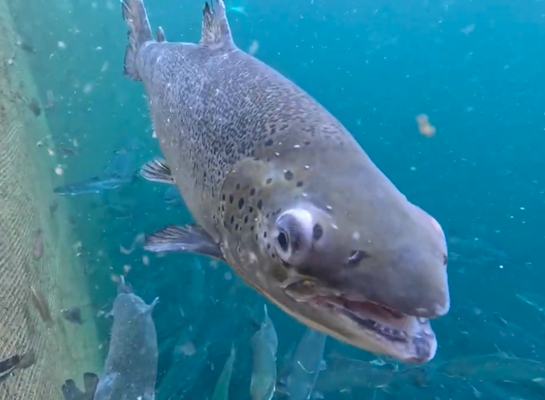
Salmon farming is factory farming. Tens of thousands of fish packed into a single sea cage, eaten alive by sea lice, ravaged by disease, "treated" with chemicals and scalding water and machines that kill as many as they cure. It is the most intensive animal farming in Britain, and dressing it in a premium label does not change what it is. It just sells it better.
The numbers are not in dispute. Scotland's salmon industry recorded around 16.7 million premature deaths in a single year with certified farms reporting monthly mortality as high as 74 percent, and losses of 50 percent or more across a production cycle are not unusual. And here is the detail that should end the conversation about standards: not one of the major certification schemes, not the Soil Association, not ASC, not RSPCA Assured, sets any maximum limit on how many fish are allowed to die. A farm can lose most of its stock and keep its certificate. If all of this is compliant, then the problem is not that the standard is being broken. The problem is the standard. You cannot certify your way out of cruelty.
The organic paradox
Now to the part people find hardest to hear. In salmon, and we want to be precise about this, organic is arguably the most misleading label of the lot, because the very rules that define it can make the suffering worse, not better. For example they promote the use of cleaner fish, which then suffer catastrophic mortality rates and whose effectiveness at scale remains unproven.
When we showed people what a certified organic salmon farm actually looks like, more than a million watched across social channels, and the reaction was disbelief. That reaction is the point. The organic label had told them to expect the opposite.
Organic standards restrict the chemicals a farm can use. That sounds humane. But sea lice and disease do not respect the rulebook, and when a farm cannot reach for medicine, it reaches instead for thermal and mechanical delousing: fish crowded, pumped and handled in their millions. Peer-reviewed research links exactly these treatments to higher mortality. Fish health inspectors have said plainly that organic principles can make controlling disease harder, because the treatments that might save fish risk the farm's organic status. Even the newer technologies now held up as the answer, like wellboats, still mean crowding and handling fish at scale, the very processes that carry a mortality cost. And organic farms still fall back on deltamethrin, a pesticide so toxic it can kill marine life far beyond the cage. So the shopper reaches past the cheaper pack, pays more, and chooses the label that promised the highest welfare of all, and may well be buying fish that suffered more.
That is not a standard that needs tightening. That is a promise that cannot be kept.
It's not about who holds the pen
We know the counterargument, because Helen Browning makes it, and so did Farming Today's own presenter: if the Soil Association walks away, a weaker body takes over, and standards fall. Nobody wins. We understand the worry, but it misreads the problem. This was never about which organisation holds the pen. It is about whether the word "organic," the most trusted symbol in British food, should be stamped on industrial fish farming at all. No certifier can make that honest. The kindest thing any of them can do is stop lending it their name.
Take the logo off this suffering
So here is our ask, and we make it with respect. The Soil Association has spent eighty years as the conscience of British farming. It built the meaning of "organic" in this country. It does not protect that legacy by setting Mowi and Cooke a few more targets to hit or miss. It protects it by refusing to let the most cruel corner of animal farming shelter under the movement's good name.
Walking away from organic salmon would not be a failure. It would be the Soil Association doing exactly what it was founded to do: telling the truth about how our food is produced, even when that truth is uncomfortable, and even when a powerful industry would rather it stayed quiet.
Take the logo off this suffering. It was never organic.